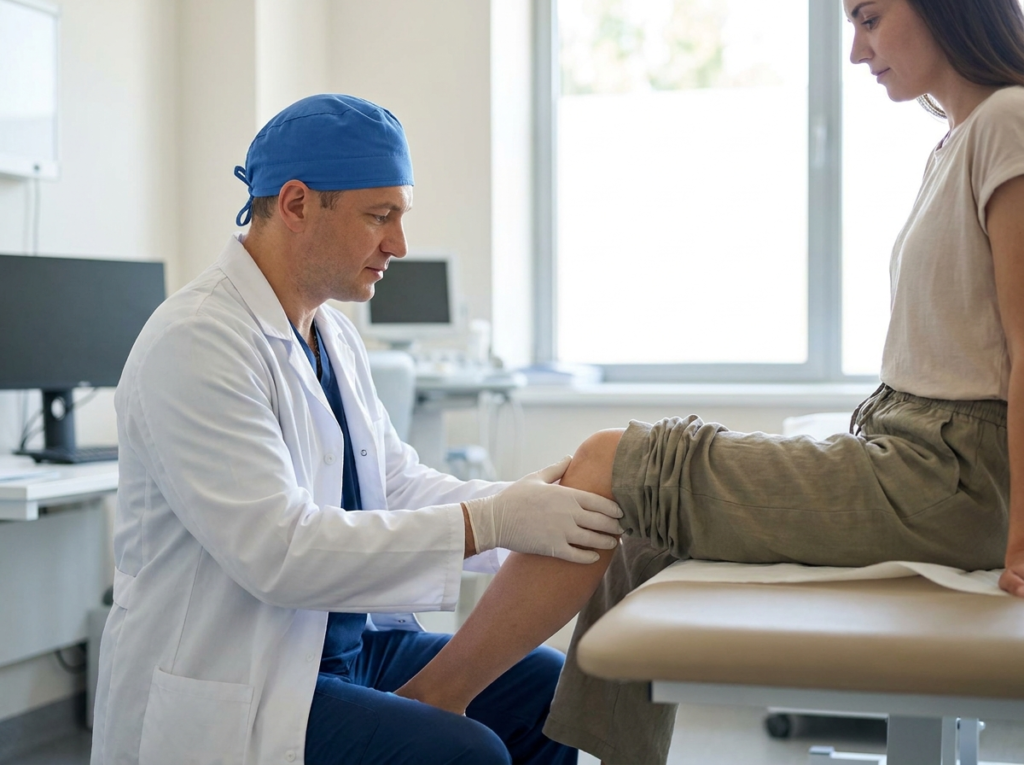
About Dr. Udit Kapoor
Dr. Udit Kapoor is an orthopaedic and joint replacement surgeon (MS Orthopaedics) with advanced fellowship training in arthroscopy, arthroplasty and sports medicine. He specialises in ACL reconstruction, knee and shoulder arthroscopy, sports injuries, joint preservation and complex fracture & trauma care.
Gallery




Social Connect
People also search for:
Sports Injuries: When to Rest and When to See a Specialist
Active people are bound to pick up the occasional knock. The tricky part is knowing when an injury will settle with rest and when it needs a proper orthopaedic assessment. Getting this right protects your long-term mobility.
Injuries you can often manage at home
Minor muscle strains, mild sprains, and general soreness usually respond to the familiar R.I.C.E. approach – rest, ice, compression, and elevation – over a few days. Pain that steadily improves and full movement that returns are reassuring signs.
Warning signs that need a specialist
Book an assessment if you notice a joint that feels unstable or gives way, an inability to bear weight, significant swelling that does not settle, a visible deformity, numbness or tingling, or pain that lingers beyond two weeks.
Why early assessment matters
Some injuries – such as ligament tears, cartilage damage, or small fractures – can look minor but worsen without the right treatment. Early diagnosis often means simpler, faster recovery and a lower risk of long-term joint problems.
Get back to what you love
If you are unsure about an injury, an orthopaedic evaluation with Dr. Udit Kapoor can pinpoint the cause and build a recovery plan that gets you safely back to sport and activity.